The check engine light illuminates on your dashboard. Frustrated, you pull over, pull out your phone, and browse the Supercheap Auto website for a $49 OBD2 code reader. Twenty minutes later, you have a generic code in your hand—perhaps P0420, P0171, or P0300—and yet, you are absolutely no closer to understanding what is actually wrong with your engine.
This scenario plays out constantly at our Sunshine North workshop. Drivers from St Albans, Keilor Downs, Braybrook, Caroline Springs, and throughout Melbourne's western suburbs arrive with a code they pulled themselves, a brand-new part they bought based entirely on that code, and the exact same dashboard warning light they started with.
The scanner told them that something was wrong. It failed to tell them why.
That crucial distinction—between merely reading a code and performing a true diagnosis—is what separates a $50 DIY tool from professional dealership-level diagnostic equipment. Understanding this difference is the key to saving hundreds of dollars in unnecessary parts.
What Is Car Diagnostic Testing?
Automotive diagnostic testing is the highly technical process of extracting and interpreting data from your vehicle's onboard computers to pinpoint the exact root cause of a fault, warning light, or drivability issue. Every vehicle sold in Australia since 2006 (for petrol) and 2007 (for diesel) must feature a standardized OBD2 (On-Board Diagnostics II) port, allowing scan tools to interface with the electronic control units.
However, a professional diagnostic procedure goes far beyond fetching a fault code. It requires tapping into live sensor data across multiple networks simultaneously, executing active bidirectional component tests, and applying years of mechanical expertise to translate that raw data into a definitive repair plan. In 2025 and 2026, cars are essentially computers on wheels. Modern vehicles introduce obstacles that basic scan tools simply cannot overcome — including OEM security gateways on some European models that won't even allow a non-approved tool to connect.
Basic Code Readers vs. Professional Scanners: The Real Difference
A basic OBD2 code reader only reads and clears engine-related trouble codes — making it suitable for simple check engine light diagnostics. A professional automotive scanner offers live sensor data, full system diagnostics including ABS, SRS, transmission and body control modules, bidirectional component testing, and system resets — making it the only appropriate tool for accurate, root-cause diagnosis on a modern vehicle.
Here is how that translates to the real world:
What a basic $50–$150 code reader CAN do:
Read generic OBD2 emission and engine fault codes.
Clear those basic codes (temporarily shutting off the light).
Check emissions readiness monitors.
What a basic code reader CANNOT do:
Access faults in the ABS, SRS (Airbag), Transmission, HVAC, or Body Control modules.
Stream live data from dozens of sensors simultaneously.
Execute active component tests (e.g., manually commanding a fuel injector or cooling fan to turn on).
Read manufacturer-specific codes that fall outside the generic standard.
Identify which specific component failure is actually triggering the code.
Calibrate complex systems post-repair (such as electronic parking brakes, DPF sensors, or steering angles).
A basic code reader tells you that a fault exists. It rarely tells you why it exists. And it almost never helps you confirm whether a repair actually fixed the problem. The code is merely the starting line. True diagnosis happens in the live data analysis and component testing.
Why Do People Keep Replacing Parts That Don't Fix the Problem?
This happens because fault codes describe symptoms, not causes.
Consider one of the most common fault codes: P0171 — System Too Lean (Bank 1). This code simply states that the engine's air-to-fuel ratio is lean (too much air, not enough fuel). But the underlying cause of that lean condition could be:
A vacuum leak in the intake manifold.
A dirty or failing Mass Airflow (MAF) sensor.
A weak fuel pump delivering low pressure.
Clogged fuel injectors.
A faulty oxygen sensor feeding bad data to the ECU.
An EGR valve stuck open.
A failing fuel pressure regulator.
Reading a trouble code is no longer enough. In many cases, it barely scratches the surface. A DIYer replaces the O2 sensor and the light stays on. A professional mechanic, however, checks live fuel trim values, verifies MAF sensor output, performs a mechanical fuel pressure test, and pumps smoke through the intake to find the $12 split vacuum hose that is actually causing the issue.
"Parts cannon" diagnostics—guessing based on a code—is an incredibly expensive way to fix a car. We frequently see vehicles that have had $400 to $800 worth of parts blindly thrown at them before arriving at our workshop with the original fault fully intact.
The Growing Complexity of Modern Vehicles
Modern vehicles—especially current diesels, hybrids, and European models—have evolved past the capabilities of standard OBD2 tools.
Security Gateways: Volkswagen Group (VW, Audi, Skoda), BMW, and Mercedes-Benz vehicles built after 2018 utilize OEM security gateways. A standard reader will be entirely locked out of live data and active tests. Only manufacturer-approved tools can bypass this firewall.
Manufacturer-Specific Codes: Generic P-codes only cover basic emissions. Every manufacturer uses an extended library of codes (P1xxx, Cxxxx, Bxxxx, Uxxxx) for their specific modules. A cheap reader simply cannot see these codes, leaving you blind to vital diagnostic data.
Bidirectional Control: Today's repairs demand active calibration. Resetting a DPF counter, calibrating an electronic parking brake, or coding a new fuel injector requires a tool that can "talk back" to the car. Australian regulations mandated universal OBD2 port compatibility for all new petrol vehicles from 2006 and passenger diesels from 2007. However, basic scanners are strictly limited to generic OBD2 and CAN readers for engine electronics — they cannot access advanced vehicle modules like anti-lock braking systems, airbags, or complex climate control networks.
What Happens During a Professional Diagnostic Assessment?
When you hand your keys to the team at JustFix Automotive, we follow a rigorous, step-by-step diagnostic protocol:
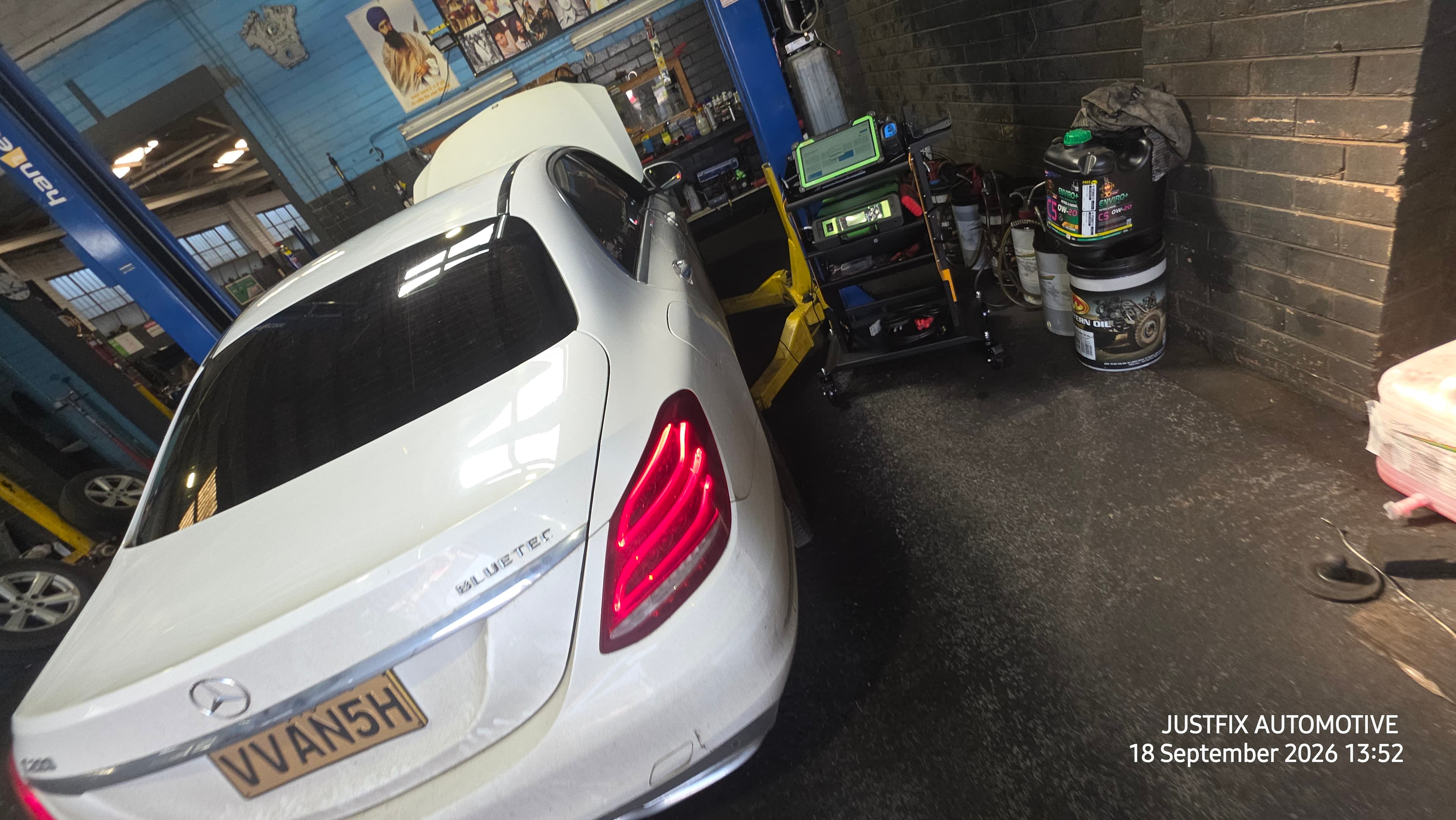
Full System Scan: We connect dealership-level equipment to ping every single module in the vehicle (Engine, ABS, SRS, Body Control, Transmission). We log both active and pending codes.
Live Data Analysis: We monitor sensor values in real-time under varying loads. By watching fuel trims, DPF differential pressures, and oxygen sensor switching patterns, we see how the engine behaves in the moment.
Active Component Testing: We use bidirectional controls to manually actuate suspect components (like an EGR valve or fuel pump) to see if they respond properly, isolating the part from the wiring or the ECU.
Physical Verification: We back up the digital data with physical tests: compression tests, mechanical fuel pressure gauges, or multimeter resistance checks.
Transparent Quoting: Once the root cause is verified, we explain the failure in plain English and provide a firmly itemized quote before any spanners are turned.
Common DIY Diagnostic Failures We See
"I replaced the O2 sensor, but the light is back." The O2 sensor reports the engine's condition; it rarely causes it. If it reads lean due to a vacuum leak, replacing the sensor just gives you a brand-new sensor reporting the exact same vacuum leak.
"I swapped the MAF sensor, but it still hesitates." A clogged air filter or a wiring fault can trigger a MAF code. Without comparing live data to known-good baselines, you are guessing.
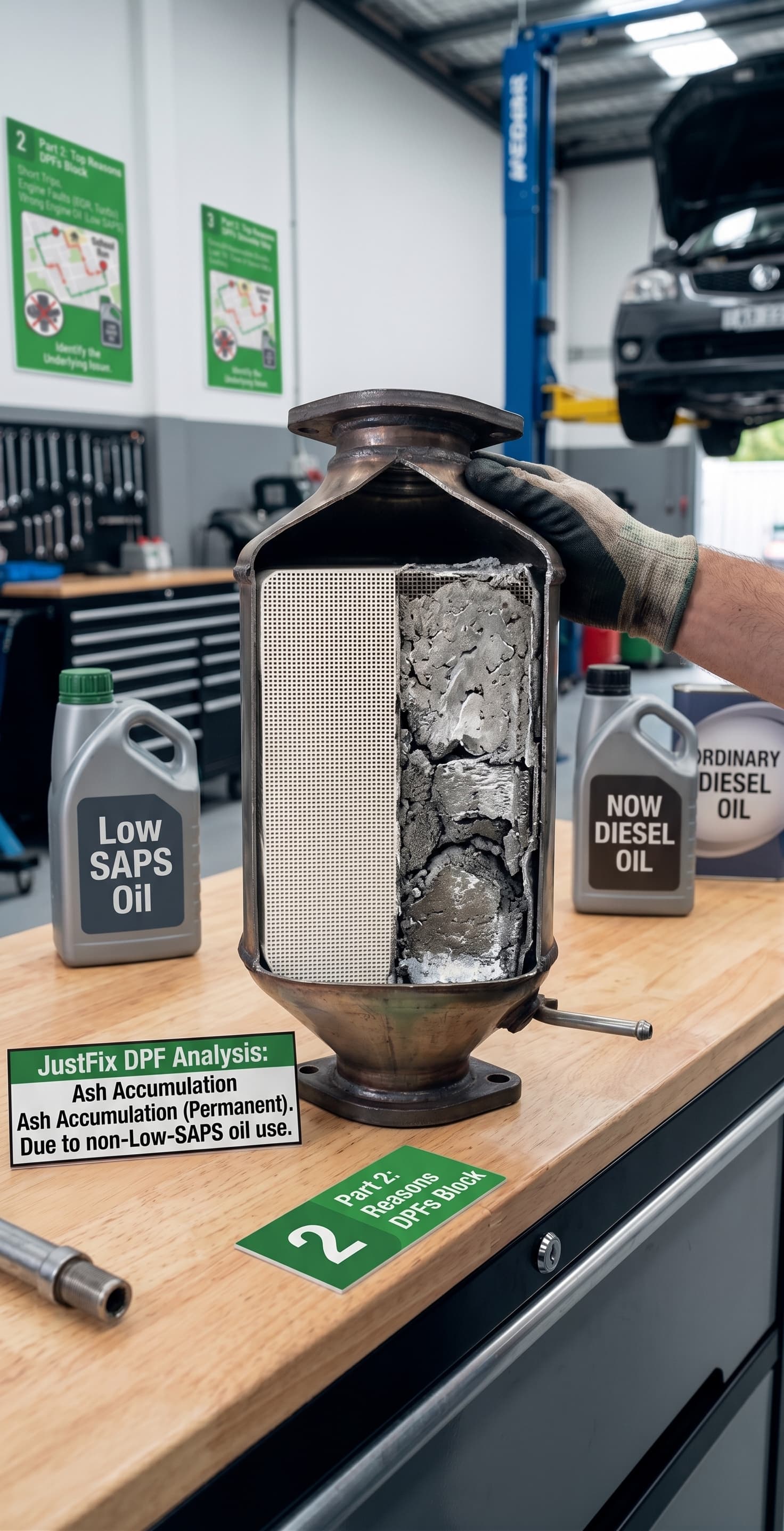
"My DPF keeps blocking after being cleaned." This is rampant among diesel owners in Deer Park, Keilor Downs, and Caroline Springs. The DPF is just a filter. If it is blocking rapidly, something upstream (like failing injectors or a stuck EGR valve) is producing excessive soot. Cleaning the filter without diagnosing the engine guarantees it will block again in six weeks.
"The ABS light is on, but my scanner says zero codes." Generic scanners cannot read ABS modules. The tool finds no engine codes and reports a clean bill of health while your anti-lock brakes remain disabled.
The Cost of Professional Diagnostics in Australia
A professional diagnostic assessment in Australia generally ranges from $100 to $200 + GST, depending on the complexity of the electrical or mechanical fault. At JustFix Automotive, this fee is quoted upfront and kept entirely separate from your repair costs.
Compare this to the $200–$600 the average driver wastes on incorrect parts during a failed DIY attempt. Investing $150 to definitively locate the exact fault on the first try is universally the cheaper option. Furthermore, if the diagnostic leads to an authorized repair in our workshop, the diagnostic fee is typically absorbed into the total repair bill.
When Should You Book a Diagnostic Test?
Immediately if:
A critical warning light (Check Engine, ABS, Airbag, Oil Pressure) stays illuminated.
Your vehicle enters "Limp Mode" (severely restricted power).
You experience heavy misfires, stalling, or severe hesitation.
Your fuel economy suddenly plummets by more than 15%.
Before buying parts:
If you have a code, let us confirm the root cause before you spend money at the parts store.
Before buying a used car:
A pre-purchase diagnostic scan is vital. It reveals hidden pending codes and exposes if a seller recently cleared the dashboard lights to mask an expensive failure.
Serving Drivers Across Melbourne's Western Suburbs
Located at 120 Munro Ave, Sunshine North VIC 3020, JustFix Automotive provides top-tier diagnostic services for drivers across Sunshine North, Sunshine, St Albans, Keilor, Kealba, Keilor Downs, Albion, Cairnlea, Braybrook, Ardeer, Deer Park, Caroline Springs, Taylors Hill, Taylors Lakes, and Hillside.
JustFix Automotive is conveniently located for drivers across Sunshine North, Sunshine, St Albans, Keilor Downs, and neighbouring suburbs. We service all makes and models — local or imported, new or older, simple or complicated.
As a VACC-accredited workshop, we hold ourselves to the highest technical standards, and every repair is backed by a 12-month / 20,000 km warranty.
Frequently Asked Questions
What is a car diagnostic test?
A diagnostic test involves connecting professional scanning equipment to a vehicle's OBD2 port to read fault codes, stream live data, and check the status of all electronic control modules. It goes beyond reading a code by utilizing live analysis and component testing to find the true root cause of a fault rather than just identifying the symptom.
How much does a car diagnostic cost in Australia?
Typically, a professional diagnostic assessment ranges between $100 and $200 + GST. At JustFix Automotive in Sunshine North, the fee is quoted upfront. If the diagnostic results in an authorized repair at our workshop, the fee is generally absorbed into the final repair total.
Can I use a cheap OBD2 reader to diagnose my car?
A basic reader is fine for reading generic engine codes and clearing a dash light on older vehicles. However, it cannot access ABS, airbags, or transmission modules, nor can it provide live sensor data, perform active component tests, or read manufacturer-specific codes. For modern vehicles, diesels, or complex electrical faults, professional equipment is mandatory.
Why does my check engine light keep coming back?
Clearing a code does not fix the underlying mechanical or electrical fault. Once cleared, the ECU will simply re-detect the failure (usually within one or two drive cycles) and illuminate the light again. A professional diagnostic targets the root cause rather than erasing the symptom.
What vehicles can JustFix Automotive diagnose?
We diagnose all makes and models, including Toyota, Mazda, Honda, Hyundai, Kia, Subaru, Ford, Holden, Mitsubishi, Isuzu, Volkswagen, Audi, Skoda, BMW, Mercedes-Benz, Peugeot, and Renault. We possess the specialist tools necessary to bypass European security gateways and access full systems on modern diesels, hybrids, PHEVs, and EVs.
Do I need a diagnostic before buying a used car?
Absolutely. A full diagnostic scan during a pre-purchase inspection is critical. It uncovers stored codes, pending faults, historical ECU data, and reveals if the seller recently wiped the vehicle's memory to hide an active dashboard warning light.
How long does a car diagnostic take at JustFix Automotive?
An initial full-system scan and assessment usually takes between 45 minutes and two hours. If extensive physical testing or wiring checks are needed to verify a complex root cause, more time may be required. We always advise you on timing when you book.
Check Engine Light On? Book a Professional Diagnostic Assessment. Don't replace parts based on a simple code. Find out what is actually wrong first—and fix it once. At JustFix Automotive in Sunshine North, we use dealership-level equipment, explain our findings in plain English, and provide a full upfront quote before any work begins. Same-day and next-day appointments are available.
📧 info@justfixautomotive.com.au
📍 120 Munro Ave, Sunshine North VIC 3020
🌐 justfixautomotive.com.au/book
Hours: Mon–Fri 8:00am–5:30pm | Sat 9:00am–3:30pm (Sunday, Christmas Day, Boxing Day & Good Friday: Closed. Other public holidays: Saturday hours apply)
Payment Options: EFTPOS · Visa · Mastercard · Amex · PayID · Afterpay · Zip Money · Humm · Bank Transfer