If you drive a diesel and you have seen that DPF warning light more than once, you already know the frustration. You get it cleaned, the light vanishes, and a few months later, it is back. A repeatedly blocked DPF is rarely just a filter problem. It is usually a symptom of an upstream component producing excessive soot, or driving conditions preventing the filter from completing its self-cleaning cycle.
Replacing a DPF without diagnosing the root cause is the fastest way to waste thousands of dollars.
What a DPF Actually Does (And How It Cleans Itself)
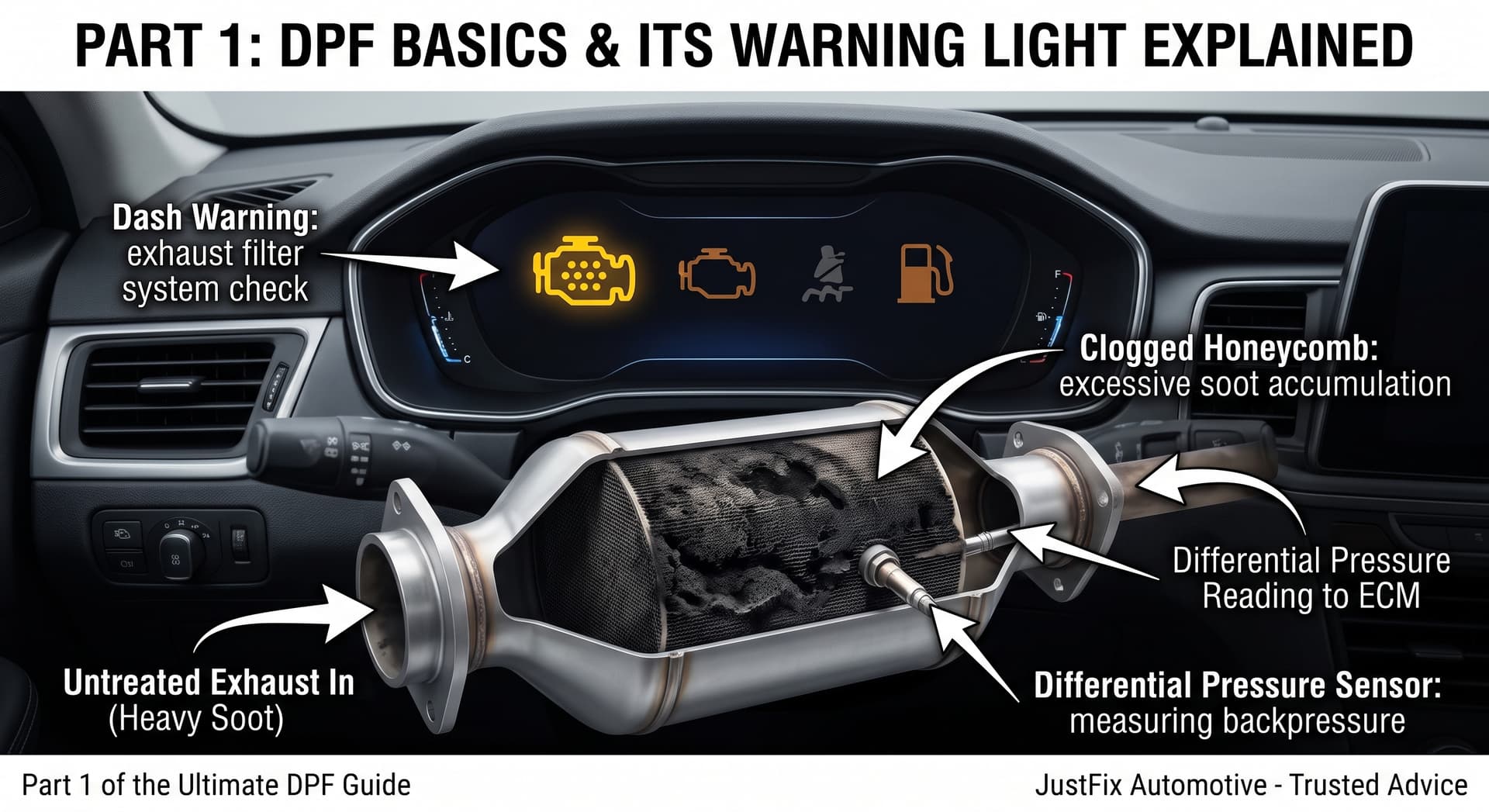
The Diesel Particulate Filter (DPF) is a ceramic honeycomb structure designed to capture fine soot before it pollutes the atmosphere. It is designed to clean itself through a high-heat process called regeneration.
Passive Regeneration: Happens automatically during sustained highway driving when exhaust temperatures naturally climb high enough (550–600°C) to burn off trapped soot.
Active Regeneration: Triggered by the engine computer when soot levels rise. The system injects extra fuel to artificially raise the exhaust temperature and force the cleaning cycle.
When these cycles are interrupted, the soot builds up faster than it can burn off, resulting in a blocked filter.
The Three Real Reasons DPFs Fail
1. The "School Run" Problem (Short Trips)
This is the most common cause of DPF failure for diesel SUVs and utes driven primarily in the city. Town-only driving never lets the exhaust get hot enough to regenerate the diesel particulate filter, so soot builds until limp mode triggers. The engine computer tries to start an active regeneration, but the stop-start nature of traffic forces it to abort. One of the most common causes of DPF failure is short journeys or stop-start driving, which can prevent the engine from reaching the high temperatures required for regeneration.

2. Upstream Engine Faults (When the DPF is the Victim)
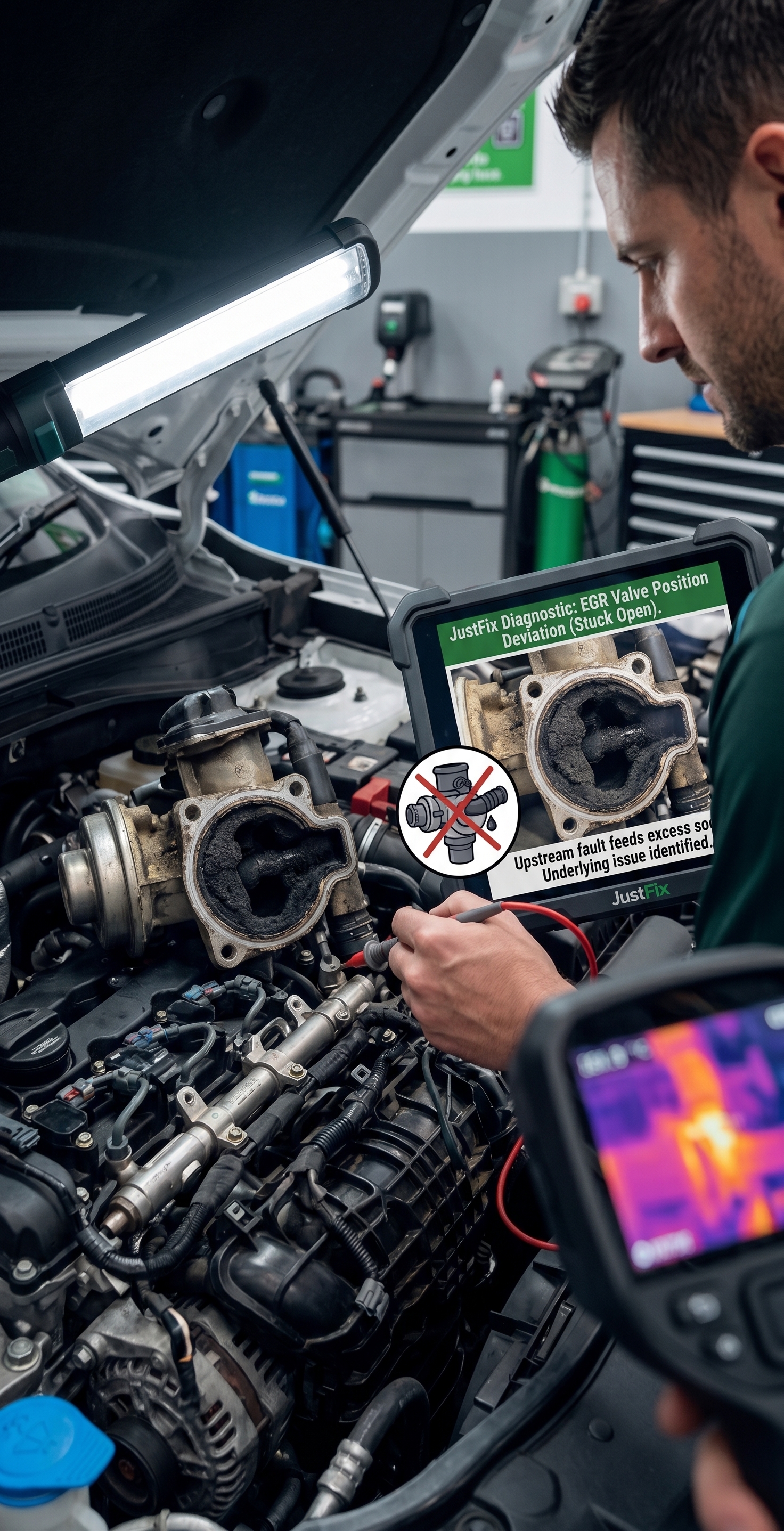
If a cleaned filter blocks again within weeks, it is being overwhelmed by engine faults feeding excessive soot into the exhaust.
Faulty EGR Valves: Improperly functioning or poorly maintained EGRs can wreak havoc on your diesel's performance, resulting in reduced power outputs, increased fuel consumption, and nasty plumes of black smoke from your exhaust. The 2.8L 1GD-FTV engine is prone to carbon buildup on the EGR valve and inlet manifold, causing rough idle, loss of power, and black smoke under load.
Worn Fuel Injectors: Poorly atomized fuel creates thick, rich soot. A blocked diesel particulate filter leads to increased emissions that can cause vehicle owners to fail an emissions test. Beyond the legalities, a clogged DPF reduces the efficiency of the exhaust system, compelling your engine to overexert itself.
Manufacturing Faults: Some blockages are inherent design flaws. The class action concerns approximately 264,000 diesel Hilux, Prado and Fortuner vehicles fitted with a Diesel Particulate Filter (DPF) that were purchased or leased between October 2015 to April 2020. Toyota also extended a ten-year warranty on affected vehicles. Faulty DPFs will emit excessive white acrid smoke, has the potential to increase fuel consumption in some cases, and requires a visit to the dealer to remedy.
3. Using the Wrong Engine Oil (The Ash Problem)
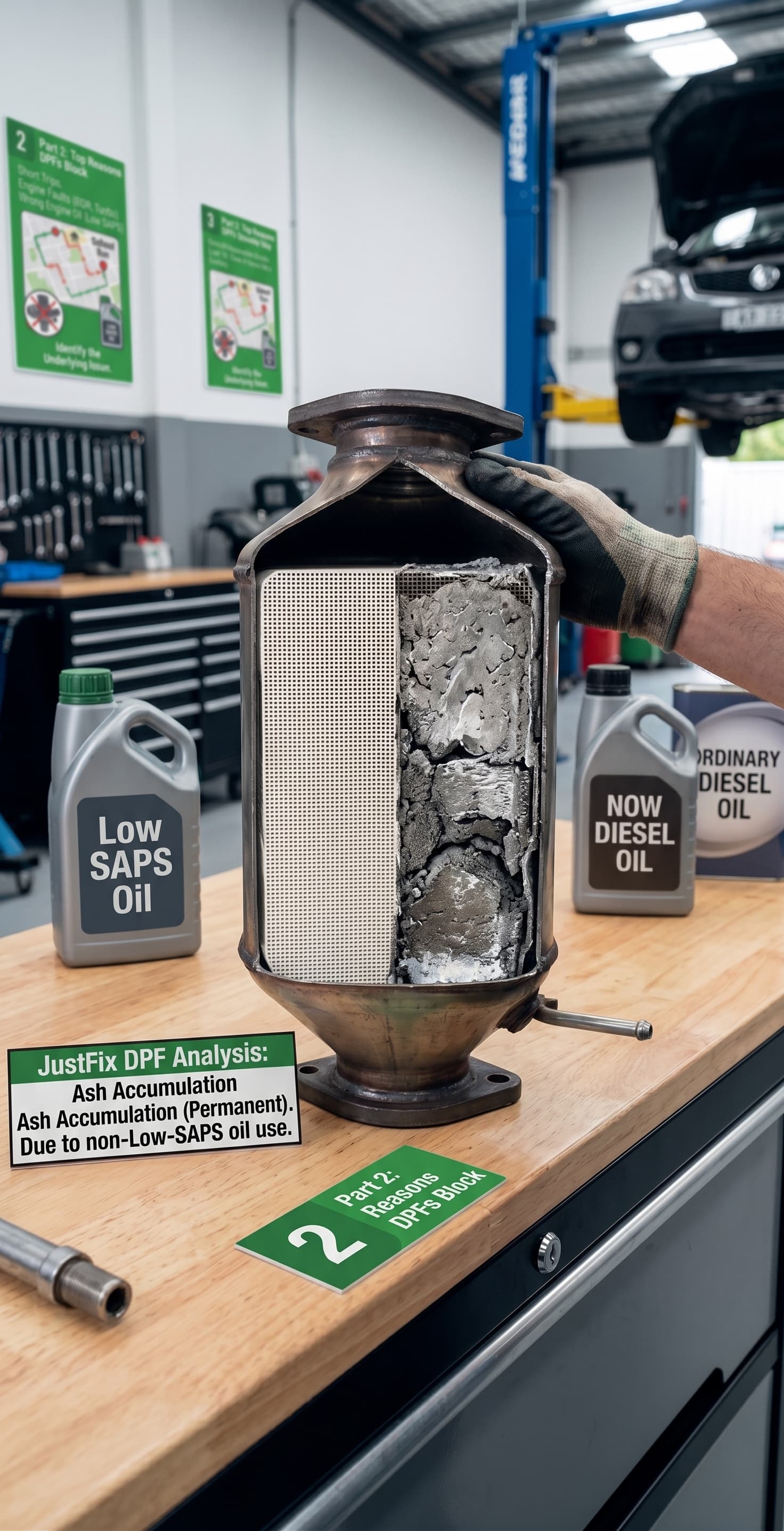
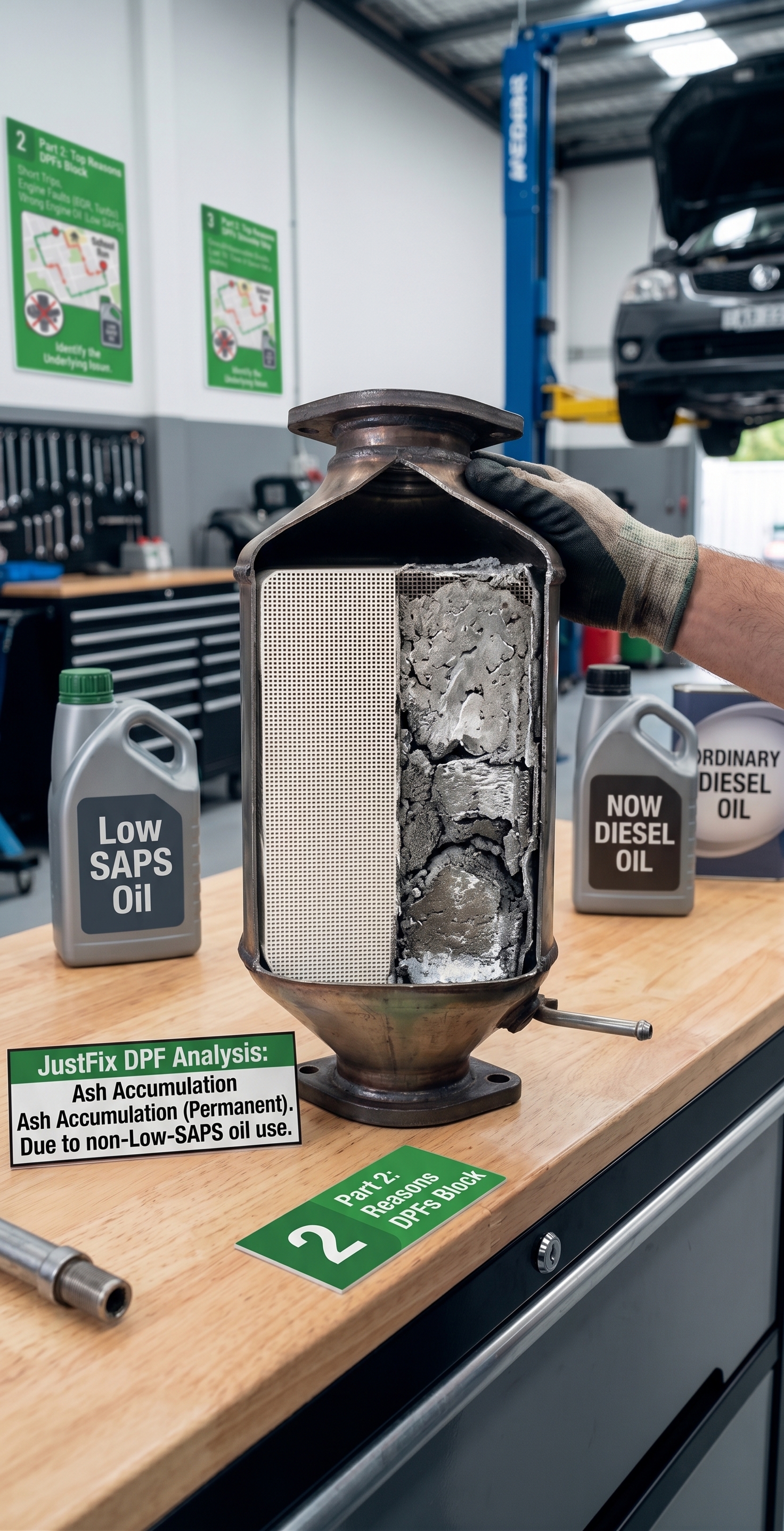
This is the most permanent way to destroy a DPF. Modern diesels require highly specific Low-SAPS oil. Low-SAPS oil is engine oil formulated with reduced sulfated ash, phosphorus, and sulfur. Modern engines are cleaner, more efficient, and less tolerant of incorrect fluids than older designs.
When oil vapor reaches the DPF — which it does through normal blowby via the crankcase ventilation system — the compounds in standard oil burn and leave behind solid ash deposits. Low-SAPS oils are formulated with reduced levels of these compounds. They still provide the necessary lubrication and protection, but they produce significantly less ash when burned.
Standard diesel oils can leave more ash behind as they burn, and that ash permanently loads the filter. DPF-equipped diesels are designed around low-ash "low SAPS" oil. Soot is regenerable. Ash is not. Each time a lubricant with high SAPS content is used, small amounts of inorganic ash accumulate inside the DPF. Over time, this accumulation reduces the effective volume of the filter and restricts exhaust gas flow.
ACEA Specification | Ash Content | Ideal Usage |
ACEA C1 | 0.5% max | Extremely low ash, strict DPF requirements |
ACEA C2 | 0.8% max | Low ash, optimized for fuel economy |
ACEA C3 | 0.8% max | Mid-low ash, high-performance protection |
What Does a Blocked DPF Actually Cost?
Guessing the problem is expensive. A full DPF replacement can range from $1,500 to $6,000+, depending on your make and model. Fortunately, the DPF replacement cost for popular Australian utes like the HiLux or Navara typically ranges from $1,200 to $2,800 for a high-quality aftermarket unit — significantly cheaper than the $5,000+ often quoted by dealerships.
Early Warning Signs Your DPF Needs Attention
Do not wait for the vehicle to shut down. Act immediately if you notice:
DPF, engine, or glow plug warning lights remaining illuminated.
"Limp mode" activation or sudden loss of acceleration power.
Increased fuel consumption combined with a sluggish engine.
The engine running a long, exceptionally hot idle.
Thick white or black smoke emitting from the exhaust under load.
The JustFix Approach to DPF Diagnosis
At JustFix Automotive, we treat a DPF warning as a diagnostic event, not an excuse to instantly sell you a new exhaust part.
Full Diagnostic Scan: We connect dealership-level Bosch and Topdon scan tools to read live soot accumulation, injector balance rates, and EGR positions.
Root Cause Analysis: We physically test components to find exactly why the filter blocked (e.g., split hoses, bad injectors, ash loading).
Honest, Upfront Quotes: We explain the true cause in plain English and give you a firm quote before any wrenches are turned.
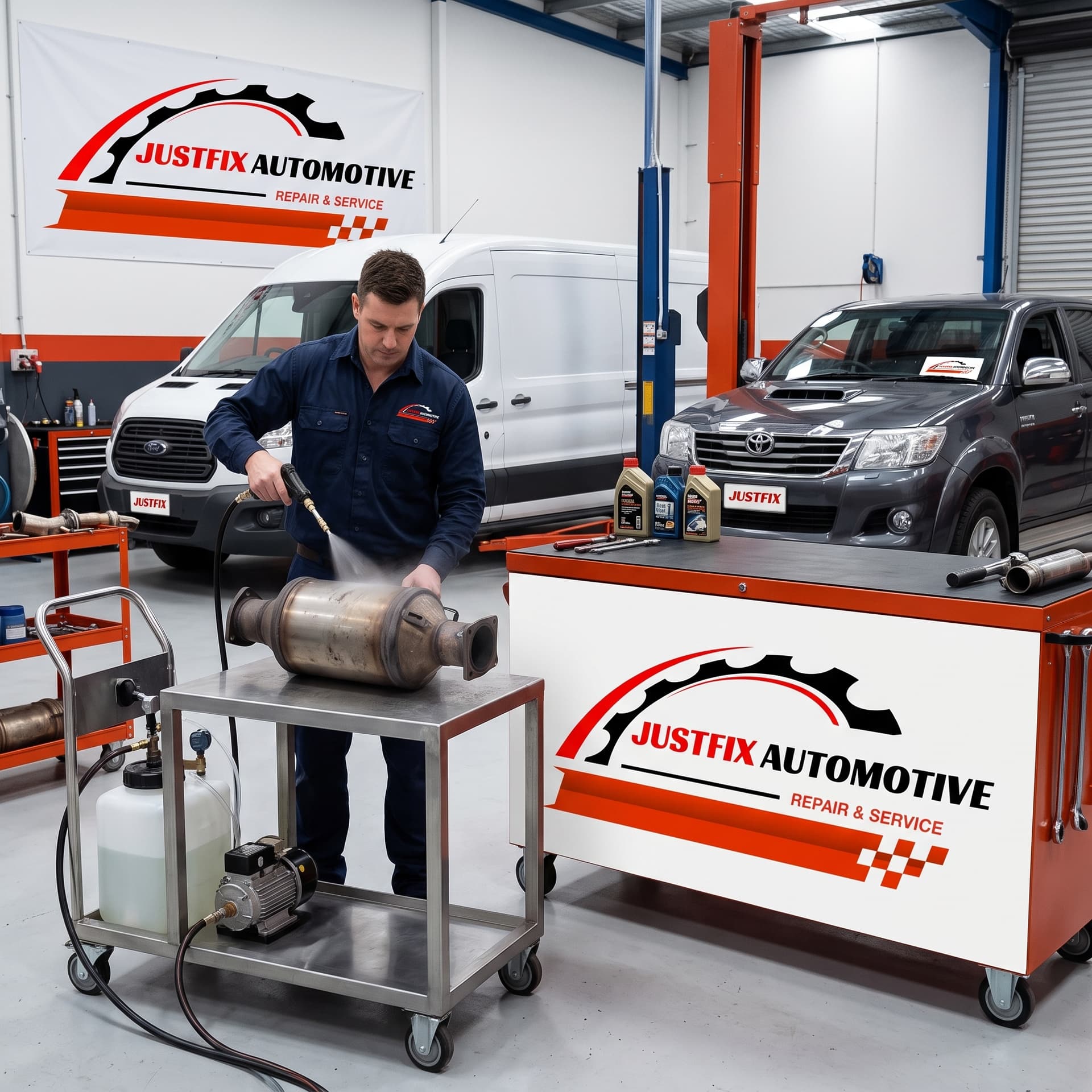
Targeted Solutions: We utilize advanced chemical cleaning and forced computer regenerations to save your existing filter whenever safely possible.
Is Your DPF Warning Light On?
If your diesel is losing power or throwing warning lights, stop guessing and start diagnosing.
Phone: 1300 335 878 or (03) 9961 7248
(JustFix Automotive is a proud VACC and Capricorn member workshop. All work is backed by a strict 12-month / 20,000 km warranty*.)