We recently had a Nissan Navara D40 towed into our workshop in Sunshine North, Victoria, Australia. The vehicle was a complete crank-no-start, and another mechanic had already looked at it but couldn't get it running. Modern diesel engines require a precise balance of fuel pressure, timing, and electronic signaling to run correctly. When multiple systems fail simultaneously, a strategic diagnostic approach is the only way to get the car back on the road safely.
Here is a step-by-step breakdown of how we diagnosed, repaired, and restored this Navara.
Step 1: Initial Diagnostics and Fuel Supply Issues
Our first step was a comprehensive scan of the vehicle’s ECM. The scan revealed three primary Diagnostic Trouble Codes (DTCs):
P0016: Crankshaft Position - Camshaft Position Correlation
P0628: Fuel Pump Control Circuit Low
P0193: Fuel Rail Pressure Sensor Circuit High
We started by verifying the crankshaft signal, which tested perfectly fine. Moving to the fuel supply side, our component testing revealed two major issues: the Suction Control Valve (SCV) was failing to hold fuel pressure, and the fuel primer was not holding a vacuum.
The Fix: We replaced the faulty SCV and primer. This allowed the engine to finally start, but it was suffering from severe injector knocking, and codes P0193 and P0016 refused to clear.
Step 2: Addressing the Injector Knock and P0193
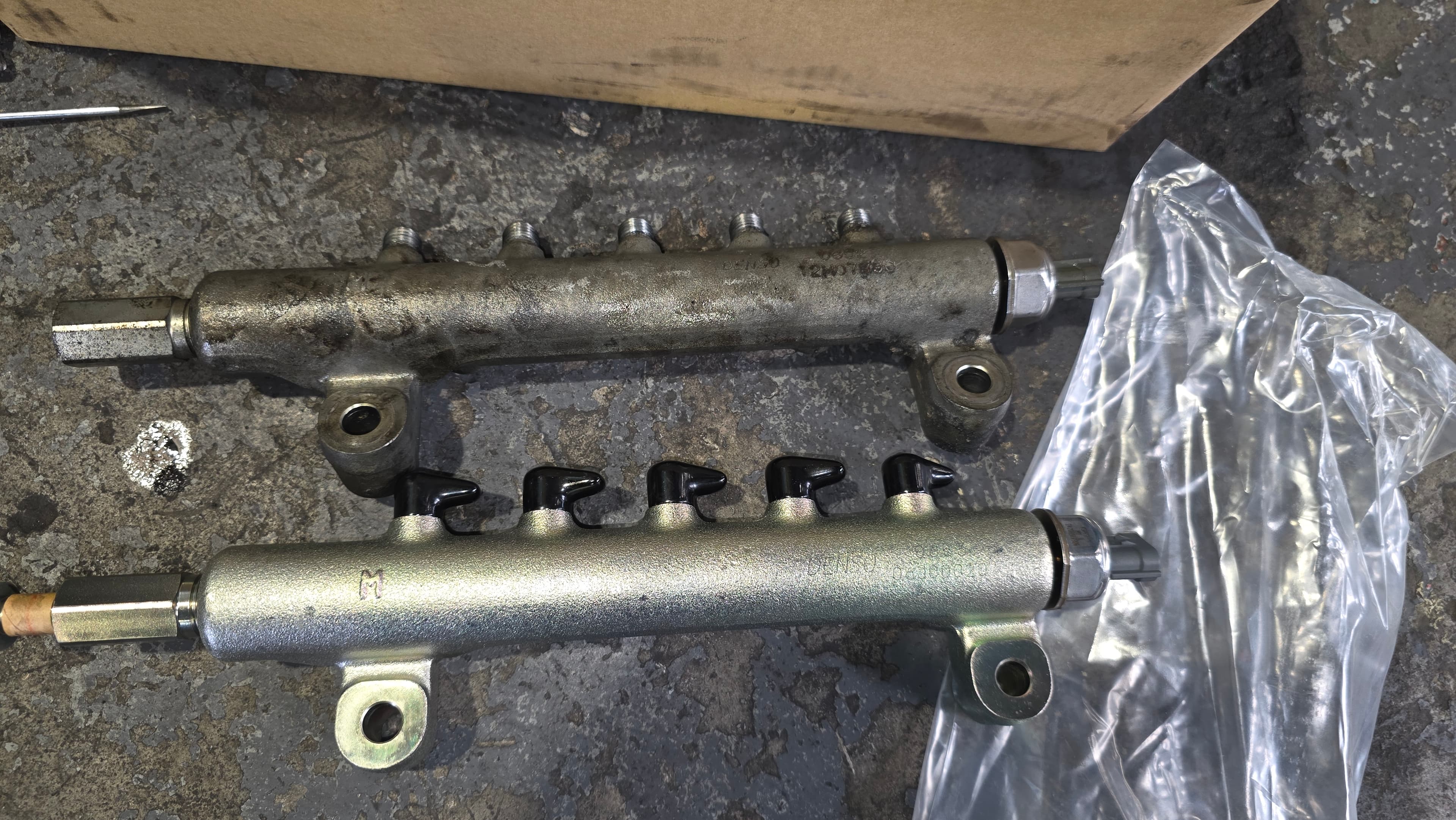
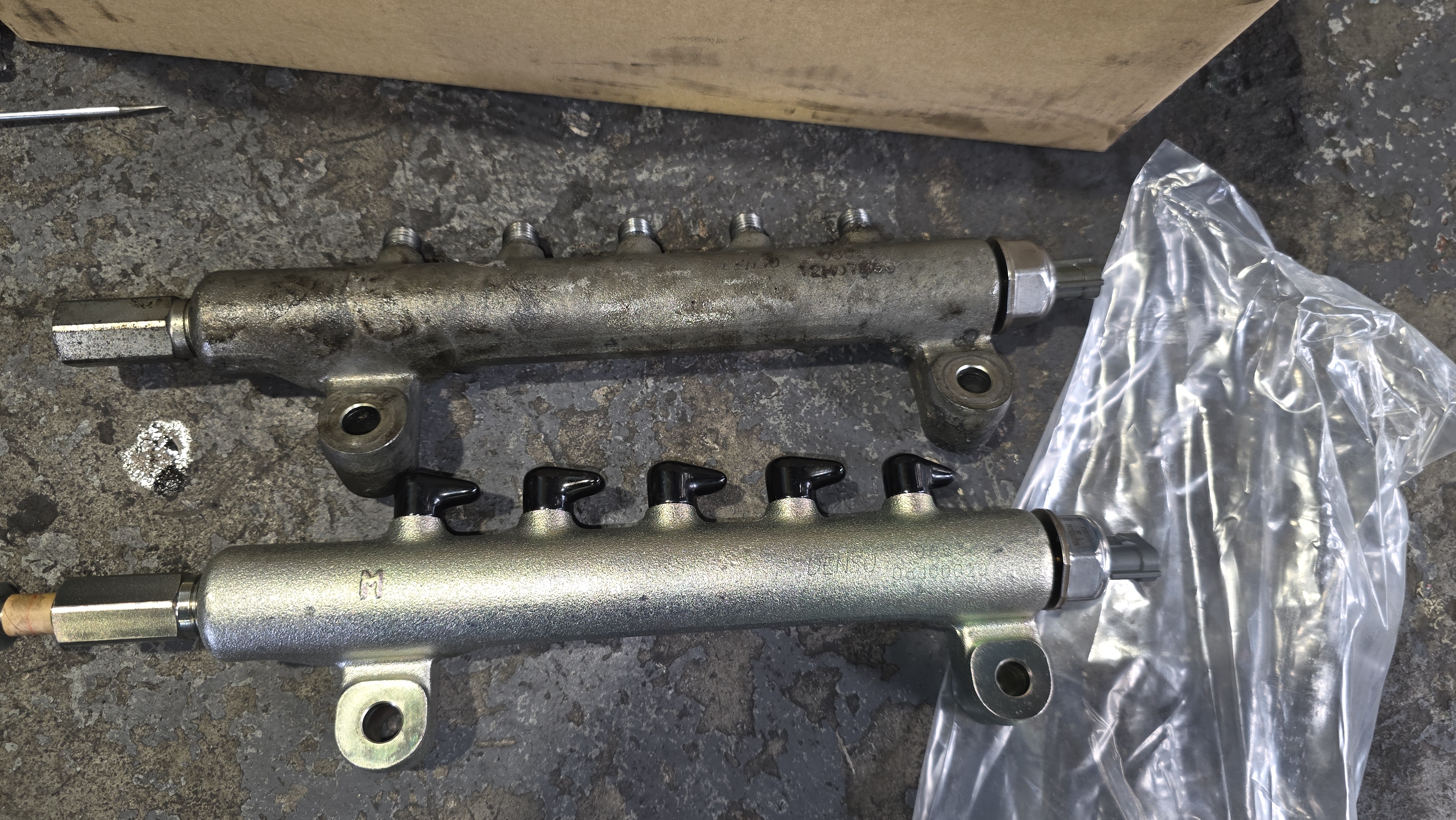
With the vehicle running but sounding harsh, we focused on the P0193 code. We tested the fuel rail pressure sensor and confirmed it was faulty, sending incorrect data to the ECU and causing the injector knock.
Unfortunately, Nissan does not sell this sensor separately; it is integrated into the entire fuel rail assembly. After consulting with the customer and getting their approval, we removed the surrounding components and installed a brand-new fuel rail, correcting a few minor inconsistencies left by previous mechanical work along the way.
The Result: The vehicle started cleanly, the harsh injector knocking was completely gone, and the engine sounded normal.
Step 3: Tackling the Persistent P0016 Code (Timing Issues)
While the engine sounded much better, we noticed it would begin chugging and running rough under load at idle, though it smoothed out when the accelerator was pressed. The P0016 code was still present.
Code P0016 indicates a mismatch between the camshaft and crankshaft timing. We advised the customer that the mechanical timing was incorrect, likely due to a stretched timing chain—a known issue on these engines. The customer wanted the vehicle fixed properly and authorized the timing chain replacement.
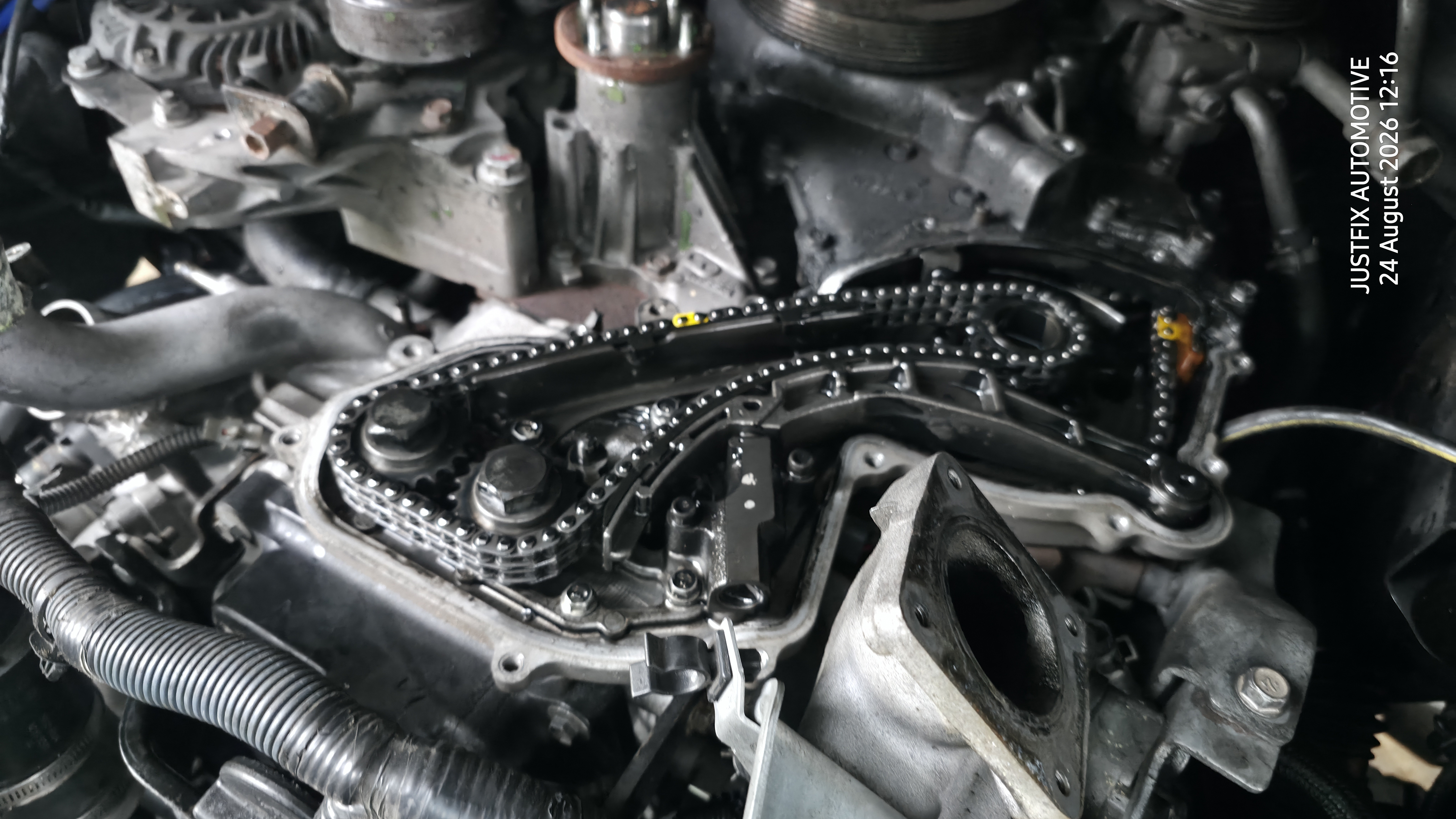
The Discovery: When we opened the front timing covers, the extent of the damage was shocking. Not only was the fuel pump timing completely incorrect, but the crankshaft sprocket was severely chewed and worn down.
Step 4: The Final Repair
To rectify this, we performed a complete timing system overhaul. We laid out and inspected the comprehensive replacement kit, which included a new timing chain, upgraded tensioners, chain guides, and all necessary sprockets.
We meticulously installed the new components, ensuring perfect alignment of all timing marks. After reassembling the covers and replacing the fluids, we started the vehicle. The Navara ran flawlessly—smooth idle, perfect acceleration, no codes, and no hesitation.
Customer Review
"My nissan navara D40 was fixed at JustFix Automotive. He diagnosed the no start issue to timing chain and fixed the clutch (firewall was damaged). Very reasonable and upfront in price. Best place for Diesel cars. Thanks Harman" — Dat Le
Frequently Asked Questions (FAQs)
Why does my Nissan Navara have code P0016? DTC P0016 indicates a correlation issue between the crankshaft and camshaft position sensors. While it can occasionally be a faulty sensor, on the Navara D40 (YD25 engine), it is most commonly a mechanical timing issue caused by a stretched primary timing chain, worn chain guides, or damaged sprockets.
Can I replace just the fuel rail pressure sensor on a D40 Navara? No. From the manufacturer, the fuel rail pressure sensor on this engine is integrated into the fuel rail assembly. If the sensor fails (often throwing code P0193), you must replace the entire fuel rail to ensure a proper, leak-free seal and accurate pressure readings.
What are the symptoms of a failing SCV valve? The Suction Control Valve (SCV) regulates fuel pressure in the injection pump. When it fails, you may experience a crank-no-start condition, rough idling, engine surging, stalling at intersections, or a vehicle that goes into "limp mode."
How do I know if my timing chain is stretched? Common symptoms include a rattling noise from the front of the engine (especially on cold startups), rough idling, sluggish acceleration, and the check engine light illuminating with timing-related codes like P0016. If left unaddressed, a failing timing chain can cause catastrophic engine damage.